
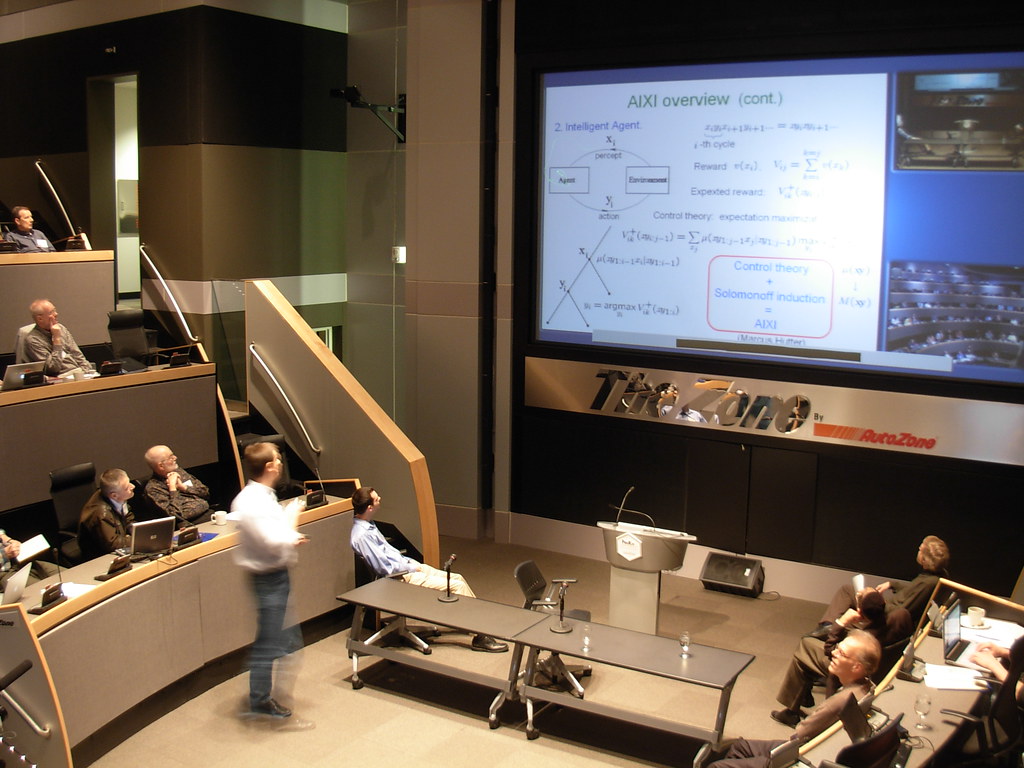
AI models in mathematics are reshaping our understanding by producing proofs that challenge major theories in computing and physics.
Understanding AI Models
AI models in mathematics have emerged as powerful tools capable of tackling complex problems and generating new insights. These advanced algorithms utilize vast amounts of data to identify patterns and relationships that humans might overlook. As researchers integrate machine learning techniques, they have begun to uncover proofs that challenge long-standing theories across various fields, including mathematics, computing, and physics.
One notable example is the use of AI models to explore conjectures that have remained unresolved for decades. By simulating numerous scenarios and analyzing outcomes, these models can propose potential solutions or highlight inconsistencies in existing theories. This capability has sparked a debate about the role of AI in the scientific process and whether it can truly contribute to mathematical understanding.
However, the integration of AI models in mathematics is not without its challenges. Critics argue that while AI can generate proofs, it often lacks the intuitive reasoning that human mathematicians possess. Furthermore, there are concerns regarding the transparency of AI-driven outcomes, as many models operate as black boxes, making it difficult to verify their conclusions.
- AI models can handle vast data sets.
- They offer new perspectives on complex problems.
- There are ongoing debates about the implications of AI-generated proofs.
As the field continues to evolve, the interplay between human intuition and AI capabilities will play a critical role in shaping the future of mathematical research.
The Impact on Mathematics
The emergence of AI models in mathematics has reshaped the landscape of mathematical research, presenting both opportunities and challenges. These advanced algorithms are capable of analyzing vast datasets, identifying patterns, and generating proofs that were previously deemed unattainable. As a result, mathematicians are now facing a dual-edged sword: the potential for groundbreaking discoveries and the risk of destabilizing long-standing theories.
One of the most significant impacts of AI models is their ability to challenge established mathematical concepts. For instance, traditional proofs that have stood the test of time are now being scrutinized under the lens of machine-generated analyses. This has led to debates within the mathematical community regarding the validity and reliability of AI-generated proofs.
Furthermore, the integration of AI models into mathematics has prompted a reevaluation of pedagogical approaches. Educators are now tasked with teaching students not only the fundamentals of mathematics but also how to collaborate with these sophisticated tools. This evolution calls for a shift in the curriculum, emphasizing critical thinking and adaptability.
In conclusion, the impact of AI models in mathematics is profound, as they challenge existing theories while opening doors to new possibilities. The dialogue between human intuition and machine precision is only beginning, suggesting a dynamic future for the field.
Challenges to Established Theories
As AI models in mathematics gain prominence, they have begun to challenge established theories that have stood for decades. These advanced algorithms, fueled by vast datasets and powerful computational capabilities, are uncovering new insights that question long-held beliefs within the mathematical community.
One of the primary challenges posed by AI models is their ability to identify patterns and relationships that human mathematicians may overlook. This has led to a series of proofs that not only validate existing theories but also refute some that were once considered unassailable. For example, AI-generated proofs have sparked debates around the validity of traditional approaches in fields such as topology and number theory.
The implications of these developments are profound. They prompt a reevaluation of the methods and principles that mathematicians have relied upon for centuries. As a result, researchers are increasingly encouraged to collaborate with AI systems to explore uncharted territories of mathematical reasoning.
Despite the potential benefits, the challenges brought forth by AI models in mathematics also raise ethical questions. The reliance on these models may lead to a diminished role for human intuition and creativity in the field, which are essential components of mathematical discovery. Thus, while AI models pave the way for innovative breakthroughs, they also necessitate a careful consideration of their impact on the future of mathematics.
AI and Computing Innovations
As advancements in technology continue to shape various fields, the integration of AI models in mathematics has emerged as a transformative force. The role of these models extends beyond mere computation; they are becoming pivotal in redefining how we approach problem-solving in complex mathematical frameworks.
One of the most significant innovations in this domain is the development of algorithms that can analyze vast datasets and identify patterns that human mathematicians might overlook. These AI-driven systems can generate new conjectures and provide insights into unsolved problems, thus challenging traditional methodologies. The implications are profound, as they not only augment mathematical research but also invite scrutiny of established theories.
Several key innovations highlight the potential of AI in mathematics:
- Automated Theorem Proving: AI models can verify proofs or find new ones, leading to unexpected results.
- Data-Driven Insights: Machine learning techniques can analyze historical data to suggest new avenues of research.
- Interdisciplinary Applications: AI models are being applied in physics and computer science, influencing mathematical approaches.
These advancements demonstrate not only the versatility of AI but also its potential to revolutionize the landscape of mathematical exploration and inquiry.
Physics Revisited by AI
In recent developments, AI models in mathematics have begun to significantly impact the field of physics, leading researchers to revisit long-standing theories. With the capability to analyze complex patterns and relationships within mathematical frameworks, these advanced models have provided new insights that challenge traditional notions.
One notable instance is the use of AI to explore the foundations of quantum mechanics. By employing algorithms designed to uncover hidden structures in data, researchers have found unexpected correlations that suggest alternative interpretations of quantum phenomena. This has prompted a re-evaluation of principles that have been upheld for decades.
Moreover, AI’s ability to generate proofs has led to breakthroughs in statistical mechanics, where conventional wisdom is being tested. The implications of these findings extend beyond theoretical physics, potentially influencing practical applications in technology and engineering.
As these AI models continue to evolve, they not only advance mathematical understanding but also challenge physicists to adapt to a new paradigm. The integration of AI into physics research signifies a shift towards a more interdisciplinary approach, fostering collaboration between mathematicians, physicists, and computer scientists.
Ultimately, the intersection of AI and physics may redefine the landscape of both disciplines, pushing the boundaries of what is considered possible within scientific inquiry.
Future of AI in Theoretical Research
The future of AI in theoretical research holds immense potential, particularly in the realm of mathematics. As AI models in mathematics continue to evolve, they promise to reshape the landscape of mathematical inquiry and discovery. Researchers are beginning to harness these advanced algorithms to tackle complex problems that have long puzzled mathematicians.
One significant area of interest is the integration of AI models into collaborative research environments. These models can analyze vast amounts of data and generate hypotheses that may not be immediately obvious to human researchers. By acting as a catalyst for new ideas, AI has the potential to accelerate the pace of discovery in theoretical mathematics.
Moreover, AI models can contribute to the validation and refinement of existing theories. They can identify inconsistencies and gaps within established frameworks, prompting further investigation and potentially leading to groundbreaking advancements. As these models become more sophisticated, the collaboration between human intellect and machine learning will likely yield innovative approaches to solving long-standing mathematical problems.
- Enhanced data analysis capabilities
- New avenues for hypothesis generation
- Collaboration between AI and human researchers
In conclusion, the ongoing development and implementation of AI models in mathematics will significantly influence the future of theoretical research, challenging conventional boundaries and expanding the horizons of mathematical understanding.
OpenAI’s Role in Advancements
OpenAI has emerged as a pivotal player in the development and implementation of AI models in mathematics, significantly impacting how mathematical proofs are generated and understood. By harnessing the capabilities of advanced algorithms, OpenAI has enabled researchers to explore complex mathematical concepts with unprecedented efficiency.
One of the notable contributions from OpenAI is its ability to produce proofs that challenge major established theories. This has led to a paradigm shift in the way mathematicians approach problem-solving, as these AI models can analyze vast amounts of data and identify patterns that may elude even the most seasoned experts.
Moreover, the collaboration between human mathematicians and AI systems has opened new avenues for discovery. Researchers are now able to refine their hypotheses and validate their findings through AI-assisted simulations, providing a deeper understanding of mathematical principles. The integration of AI models in mathematics not only accelerates research but also democratizes access to advanced mathematical tools.
As OpenAI continues to refine its models, the implications for theoretical research are profound. The ongoing exploration of AI’s capabilities promises to challenge traditional methodologies, leading to innovative approaches in mathematics and beyond. The journey of AI models in mathematics is just beginning, and the future holds exciting possibilities for further advancements.
AI models in mathematics have shown remarkable potential in solving complex problems, yet they also present significant challenges to existing theories. As researchers delve deeper, the limitations of AI models in mathematics become increasingly apparent, prompting a reevaluation of their role in the field.
By brewbooks via Openverse
References
Related stories
Is the Triassic Armored Amphibian the Worst Living Nightmare? · Reasoning Models: What is the Best Proven Course in PyTorch? · Drawquarium release date: What’s the best trailer reveal?